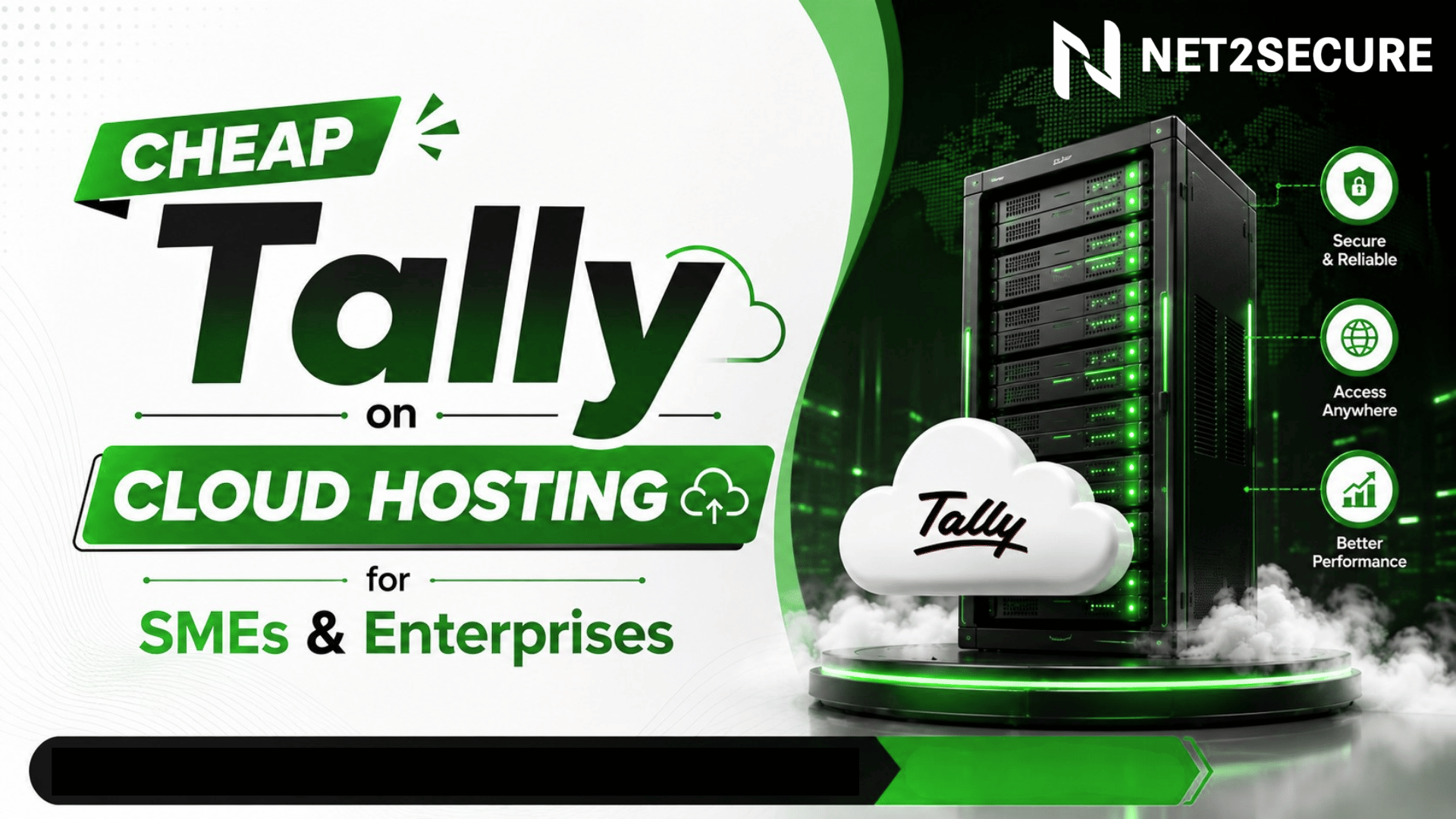



Running a business efficiently requires more than just keeping track of sales and expenses. Accounting, GST, taxation, inventory, payroll and financial reporting all need to be managed accurately and securely. For many businesses in India, Tally remains an important part of their daily accounting operations.
However, traditional Tally setups can become difficult to manage when employees work from different locations, businesses expand to multiple branches, or accounting teams need access to data remotely. This is where Tally on Cloud can make a significant difference.
For businesses searching for cheap Tally on Cloud in India, cloud hosting provides an affordable way to access Tally remotely without investing heavily in physical server infrastructure. SMEs can reduce infrastructure management costs, while enterprises can benefit from centralized access, scalability and professional hosting infrastructure.
But choosing a cheap solution should not mean choosing an unreliable one. The right cloud hosting provider should combine affordability with performance, security, accessibility and dependable support.
What Is Tally on Cloud Hosting?
Tally on Cloud is a hosting solution that allows businesses to run their Tally software and access their Tally environment through a remotely hosted server. Instead of keeping Tally and its associated data only on a local office computer, the Tally environment is hosted on cloud infrastructure. Authorized users can then connect to the hosted environment remotely using an internet connection.
This can make Tally more accessible for businesses with:
- Multiple offices
- Remote employees
- Distributed accounting teams
- Branch locations
- Accountants working from different locations
- Business owners who need remote access
A cloud-based Tally environment can also help businesses centralize their accounting operations rather than maintaining separate setups across different locations.
Why Is Cheap Tally on Cloud in India Becoming Popular?
Indian SMEs and enterprises are increasingly looking for ways to reduce IT infrastructure expenses without sacrificing productivity.
Maintaining an in-house server can involve several costs, including:
- Server hardware
- Storage
- Networking equipment
- Electricity
- Cooling
- Hardware maintenance
- Backup infrastructure
- Technical administration
For a small or medium-sized business, maintaining all this infrastructure may not always be practical.
With cheap Tally on Cloud in India, businesses can use hosted infrastructure instead of purchasing and maintaining their own physical servers. The business pays for the hosting resources it needs while the infrastructure is managed by the hosting provider.
This can make cloud-based Tally hosting a cost-effective option for businesses that want remote access and centralized accounting without a large infrastructure investment.
Benefits of Tally on Cloud for SMEs
Tally on Cloud offers SMEs a simple, flexible, and cost-effective way to manage their accounting operations. It reduces the need for in-house infrastructure while providing secure access, centralized data, and easy scalability as the business grows. Here are some key benefits:
1. Affordable Infrastructure
One of the biggest advantages of Tally cloud hosting is that businesses do not necessarily need to purchase dedicated physical infrastructure for their accounting environment. A cost-effective Tally cloud plan can provide the required computing resources without the capital expenditure associated with setting up an in-house server. This is particularly useful for startups and SMEs that need to carefully manage their IT budgets.
2. Access Tally From Anywhere
Traditional Tally installations can sometimes restrict users to specific computers or office networks. Tally on Cloud provides a more flexible approach. Authorized users can access the hosted Tally environment from different locations, subject to the provider's access and security configuration. This means an accountant can work from the office while a business owner reviews information remotely.
It can also be useful for businesses with employees working from home or multiple branches.
3. Centralized Data
Managing accounting data across several computers can become complicated. With a centralized cloud environment, authorized users can work with the same hosted Tally setup.
This can simplify collaboration between:
- Finance teams
- Accountants
- Business owners
- Branch offices
- Management teams
Centralization can also reduce the complexity of maintaining multiple separate installations.
4. Reduced Server Management
Businesses that operate their own servers are responsible for hardware maintenance, operating system management, storage and several other infrastructure-related tasks. With managed Tally cloud hosting, much of the infrastructure management can be handled by the hosting provider.
This allows business teams to spend more time on accounting and business operations instead of server administration.
5. Easy Scalability
A business may start with a small accounting team and grow over time. Its Tally hosting requirements may increase as more users, data and branches are added. Cloud hosting makes it easier to upgrade resources according to changing requirements. Instead of purchasing a new physical server, businesses can choose a higher hosting configuration when additional resources are required.
6. Better Support for Remote Work
Remote working has changed the way many businesses operate. Finance and accounting teams may no longer work exclusively from one office. Tally on Cloud can provide a centralized environment that supports remote access for authorized users. This can help businesses maintain accounting workflows even when employees are working from different locations.
Tally on Cloud for Enterprises
While affordability is particularly important for SMEs, enterprises also need reliable and scalable accounting infrastructure. Large organizations may have multiple branches, larger finance teams and complex workflows. For these businesses, Tally cloud hosting can provide a centralized environment that can be accessed by authorized users across different locations.
Enterprise businesses should pay particular attention to:
- Server performance
- Resource allocation
- User access controls
- Backup policies
- Data security
- Scalability
- Network reliability
- Technical support
An enterprise should not select a hosting provider solely because it offers the lowest price. The goal should be to find the best balance between cost, performance, security and reliability.
Is Cheap Tally on Cloud Secure?
One of the biggest concerns businesses have when moving accounting applications to the cloud is security. Tally environments can contain sensitive financial and business information. Therefore, security should be a major consideration when choosing a Tally cloud hosting provider. A reliable hosting environment should consider multiple layers of protection.
Firewall Protection
A properly configured firewall can help control network traffic and reduce exposure to unauthorized connections.
Access Control
Only authorized users should be able to access the hosted Tally environment. Strong authentication and appropriate access permissions can help reduce the risk of unauthorized access.
Data Backup
Regular backups are important for protecting accounting information against accidental deletion, hardware failures or other unexpected incidents. Businesses should understand how frequently backups are performed and how restoration works.
Infrastructure Monitoring
Continuous monitoring can help identify infrastructure and performance problems and allow technical teams to respond more quickly.
Secure Remote Access
Remote access should be configured using appropriate security measures so users can access Tally without unnecessarily exposing the environment. Therefore, when searching for cheap Tally on Cloud in India, businesses should evaluate the security features included with the hosting plan rather than focusing only on monthly pricing.
How Much Does Tally on Cloud Cost in India?
The cost of Tally cloud hosting varies depending on the resources and services required.
Factors that can influence pricing include:
- Number of users
- RAM
- CPU resources
- Storage
- Backup requirements
- Operating system
- Security configuration
- Support requirements
- Hosting infrastructure
- Additional applications
A small business with a few Tally users may require significantly fewer resources than an enterprise with multiple users and branches.
Therefore, there is no single Tally cloud hosting price that is suitable for every business. When comparing cheap Tally on Cloud in India, businesses should compare the complete package rather than looking only at the advertised monthly price.
A slightly more expensive plan that includes better resources, backups and support may provide considerably better value over time.
Cheap Tally on Cloud vs Traditional Tally Hosting
Traditional Tally setups generally depend on local computers or servers, while Tally on Cloud moves the hosting environment to remote infrastructure.
| Feature | Traditional Tally Setup | Tally on Cloud |
|---|---|---|
| Remote access | Limited | Yes |
| Physical server requirement | May be required | Not necessarily |
| Infrastructure management | Business-managed | Provider-managed |
| Multi-location access | More complex | Easier |
| Scalability | Hardware dependent | More flexible |
| Centralized environment | Depends on setup | Yes |
| Maintenance | Internal responsibility | Reduced |
| Accessibility | Office dependent | Internet-based |
The right option depends on the business's requirements, but cloud hosting can be particularly useful for organizations with distributed teams and multiple locations.
Who Should Choose Tally on Cloud?
Tally cloud hosting can be useful for a wide range of organizations.
- Small Businesses: Small businesses can use cloud hosting to avoid maintaining expensive server infrastructure.
- SMEs: Growing SMEs can benefit from centralized accounting access while maintaining control over IT costs.
- Enterprises: Enterprises can use cloud infrastructure to support multiple users, branches and locations.
- Chartered Accountants: CA firms and accounting professionals can benefit from remote access to their hosted Tally environment.
- Multi-Branch Companies: Businesses operating from multiple offices can use centralized cloud hosting to simplify accounting access.
- Remote Teams: Organizations with distributed employees can provide authorized accounting staff with remote access to Tally.
What to Look for in Cheap Tally on Cloud Hosting
Choosing the cheapest provider available may not always be the right decision. Before purchasing a Tally cloud hosting plan, consider the following factors.
Performance: Tally should respond smoothly during everyday accounting operations. Check whether the provider offers sufficient CPU, RAM and storage for your workload.
Reliability: Accounting is an important business function. Choose infrastructure designed to provide dependable availability.
Storage: Consider your current Tally database size and future storage requirements.
Backup: Ask how often backups are taken, how long they are retained and how restoration is handled.
Security: Check firewall protection, access control, monitoring and other security measures.
Technical Support: Responsive support can be important when accounting operations depend on the hosted environment.
Scalability: Make sure the hosting plan can be upgraded as the business grows.
Transparent Pricing: Understand what is included in the price and whether important services carry additional charges.
How to Choose the Right Tally Cloud Hosting Provider in India
Choosing a provider should start with understanding your own requirements.
Step 1: Identify Your Users: Determine how many people need access to the Tally environment.
Step 2: Understand Your Workload: Consider how frequently Tally is used and the size of your accounting database.
Step 3: Determine Resource Requirements: Evaluate CPU, RAM and storage requirements based on your workload.
Step 4: Check Remote Access: Make sure the hosting environment supports the type of remote access your employees require.
Step 5: Evaluate Security: Review the provider's security controls, firewall configuration, access management and backup policies.
Step 6: Compare Support Check whether technical support is available when you need assistance.
Step 7: Review Scalability: Your provider should be able to accommodate additional users and resources as your business grows.
Step 8: Compare Total Value: Instead of choosing only the lowest price, compare performance, security, support, backups and included resources.
How Tally on Cloud Can Help Growing SMEs
Growth often creates new technology challenges. A company may initially have one accounting employee using Tally on a desktop computer. As the company expands, additional employees, branches and management users may need access. A traditional setup can become increasingly difficult to manage. Moving Tally to the cloud can provide a centralized environment that supports this growth.
For example, a business could have its accounting team working from one office while authorized management users access the hosted environment from another location.
This flexibility can make accounting operations more convenient without requiring the business to build a large internal IT infrastructure.
Why Businesses Should Not Choose Tally Hosting Based Only on Price
The word cheap can be attractive when comparing hosting plans, but price should not be the only consideration. A very low-cost hosting plan may provide insufficient resources, limited support or inadequate backup options. If the accounting environment becomes slow or unavailable, the resulting productivity loss can cost the business more than the hosting savings.
Instead, businesses should look for cost-effective Tally cloud that provides the right combination of affordability, performance and reliability. The best Tally hosting plan is not necessarily the cheapest plan. It is the plan that delivers the required value for the business's budget.
Tally on Cloud and Business Productivity
Cloud hosting can also make accounting workflows more flexible. Business owners can access their hosted environment remotely, while accounting teams can continue working from their regular locations. For organizations with multiple branches, centralized access can reduce the need to maintain separate Tally environments. This can improve collaboration and make it easier for authorized users to work with a common accounting environment.
Why Tally on Cloud Makes Sense for Indian Businesses
Indian businesses operate in a highly competitive environment where controlling operational costs is important.
At the same time, businesses increasingly need remote accessibility, reliable infrastructure and flexible technology. Tally on Cloud can address these requirements by providing businesses with access to cloud-hosted Tally infrastructure without requiring them to invest heavily in physical servers. For startups and SMEs, this can help keep infrastructure costs manageable. For larger organizations, cloud hosting can provide flexibility and centralized access across locations.
Final Thoughts
For businesses looking for a flexible and affordable accounting infrastructure, Tally on Cloud in India can be an attractive option. SMEs can use cloud hosting to reduce infrastructure management and provide employees with remote access to Tally. Enterprises can benefit from centralized access, scalability and professional hosting infrastructure. However, affordability should always be considered alongside performance, security, backups, reliability and technical support. Before choosing a provider, evaluate your number of users, resource requirements, data size, security needs and expected business growth.
The right Tally on Cloud can help businesses move beyond the limitations of traditional desktop-based accounting setups while keeping infrastructure costs under control. For growing Indian businesses, the objective should not simply be to find the cheapest Tally hosting plan. It should be to find reliable, secure and cost-effective Tally cloud hosting that delivers long-term value.





.png)