By Shan Mohd • Sep 01, 2026
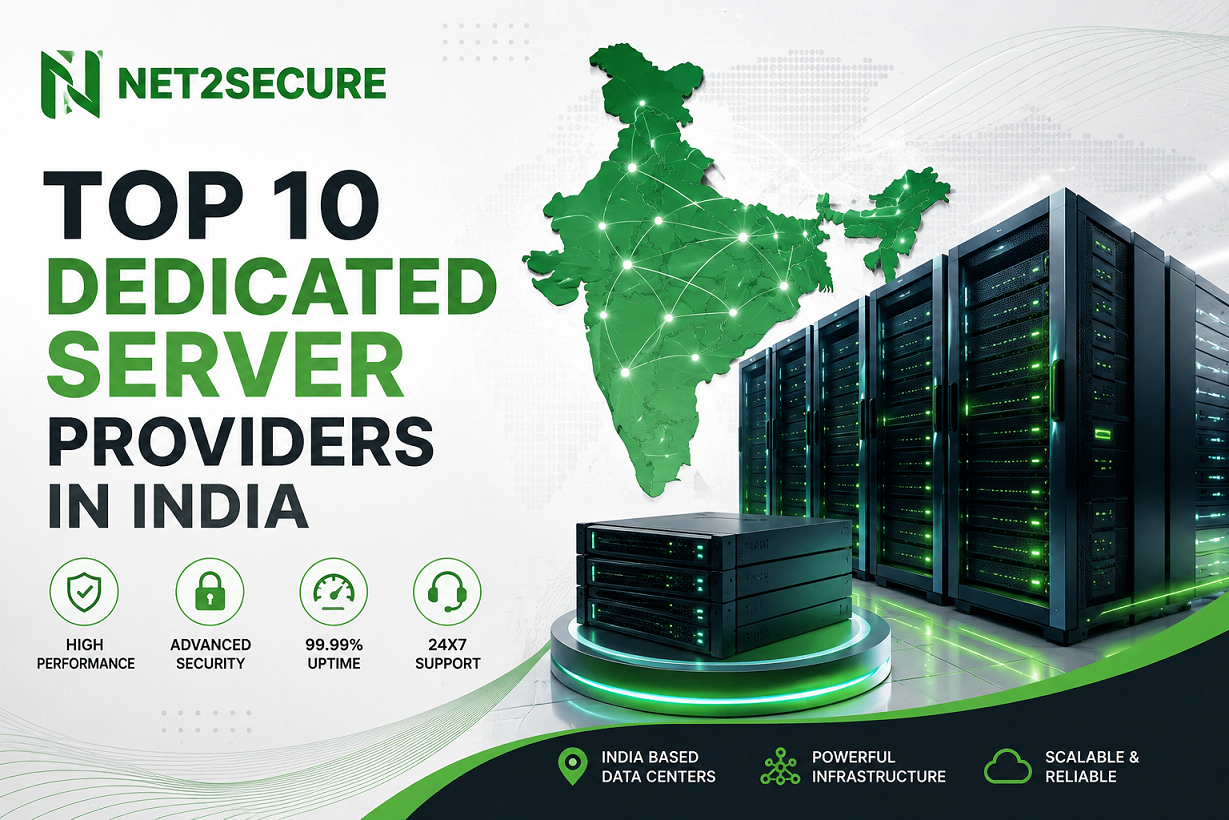
If your website, SaaS platform, or database has outgrown shared hosting or a VPS, a dedicated server is usually the next logical step. But finding the best dedicated server providers in India means wading through dozens of vendors, each claiming the fastest hardware and the highest uptime. This guide breaks down what dedicated server hosting actually is, and profiles ten established providers serving the Indian market, so you can compare them on facts rather than marketing copy. What Is Dedicated Server Hosting? A dedicated server is a physical machine leased entirely to one customer, no other business shares its CPU, RAM, storage, or network port. This is different from shared hosting (where hundreds of sites split one server) and VPS hosting (where a physical server is virtually partitioned among several tenants). Businesses move to dedicated server hosting in India when they need: Predictable, unshared performance for high-traffic sites or applications Full root/admin access to configure the OS, software stack, and security policies Better isolation for compliance-sensitive workloads (finance, healthcare, government) Headroom to run resource-intensive databases, ERPs, or AI/ML workloads Local data residency, web hosting in an Indian data center to cut latency for Indian users and align with data-localization expectations The trade-off is cost and responsibility: Dedicated servers cost more than shared or VPS hosting plans, and unmanaged plans require your team (or the provider's managed-services add-on) to handle patching, monitoring, and security. Top 10 Dedicated Server Providers in India 1. Net2Secure Net2Secure is an India-based web hosting company (headquartered in Greater Noida, Uttar Pradesh) offering VPS, cloud, and dedicated hosting. Its dedicated server lineup includes Linux, Windows, bare metal, NVMe, and GPU-optimized servers, built on Intel/AMD processors with configurable CPU, RAM, and storage. Both managed and unmanaged plans are available, with the managed tier including proactive monitoring, SSL, and 24×7 technical support. Net2Secure also offers GPU dedicated servers aimed at AI/ML and simulation workloads. Best for: SMBs, Enterprises and growing businesses that want India-based support with flexible Linux/Windows/GPU configurations. Advantage: Broad product range (Linux, Windows, bare metal, NVMe, GPU) under one vendor, with root access on every plan. Consideration: As with most regional providers, ask for current benchmark and SLA documentation directly, since published uptime figures vary across its own product pages. 2. ESDS Software Solution Founded in 2005 and headquartered in Nashik, ESDS operates Tier III–certified data centers in Nashik, Navi Mumbai, Bengaluru, and Mohali. It offers dedicated Linux and Windows servers on Dell and HP hardware, alongside colocation and managed cloud services, and is MeitY-empanelled for government workloads. Best for: Enterprises and government/BFSI clients that need compliance-heavy, India-owned infrastructure. Advantage: Multiple owned data centers across India with colocation and DR options alongside dedicated servers. Consideration: Positioned more toward enterprise and managed-cloud customers than budget-focused SMB hosting. 3. CtrlS Datacenters CtrlS operates Rated-4 (Tier IV) certified data centers in Hyderabad, Mumbai, Noida, and Bengaluru, and is one of the longest-standing large-scale data center operators in India. Alongside colocation, disaster recovery, and cloud services, it offers dedicated server hosting on branded hardware, with plans in both value and higher-performance tiers. Best for: Enterprises needing Tier IV-grade infrastructure with strong fault-tolerance guarantees. Advantage: Rated-4 certification and multi-city data centers built for high fault tolerance (N+N redundancy). Consideration: Positioned more toward enterprise colocation and managed hosting than budget self-service dedicated plans, confirm current dedicated-server specs and pricing directly, as some published plan details online are dated. 4. Web Werks (Iron Mountain Data Centers) Web Werks is a long-standing Indian data center operator, now wholly owned by Iron Mountain Data Centers. It runs facilities in Mumbai, Navi Mumbai, Pune, and Bengaluru, offering colocation, cloud, and Bare Metal Servers on Dell/HP hardware with Intel Xeon processors, up to 1 TB RAM, and NVMe storage. Web Werks emphasizes network density, listing multiple carriers, internet exchanges, and ISPs at its facilities. Best for: Enterprises needing carrier-dense, highly interconnected data centers for bare-metal deployments. Advantage: Strong network ecosystem and physical security (biometric access, CCTV, fire detection) inherited from a large-scale data center operator. Consideration: Geared toward enterprise and colocation-style engagements rather than low-cost entry plans. 5. RackBank Datacenters RackBank operates data centers in Indore, Raipur, and Mumbai, offering dedicated/bare-metal servers, colocation, managed services, and GPU-based "AI Metal" servers for machine learning workloads. Its bare-metal lineup runs on AMD EPYC and Intel processors with customizable CPU, RAM, and NVMe storage, and it highlights immersion-cooling technology at some facilities. Best for: Businesses wanting bare-metal or AI/GPU infrastructure hosted outside the traditional Mumbai/Delhi corridor. Advantage: Central-India data center locations plus dedicated GPU/AI server options. Consideration: A newer, fast-expanding brand compared to legacy players, verify current data center locations and SLAs for your specific plan, as its footprint has grown quickly. 6. MilesWeb MilesWeb is a widely used Indian web host offering shared, VPS, cloud, and dedicated server hosting from an ISO-certified data center in Mumbai. Its dedicated plans run on Intel Xeon and AMD processors with a choice of Linux distributions or Windows Server, and both managed and unmanaged tiers are available, with control panel options like cPanel, WHM, and Plesk. Best for: SMBs and agencies that want an India-hosted, budget-friendly dedicated server with managed-hosting add-ons. Advantage: Transparent plan tiers and quick provisioning, with managed support bundled at a higher tier. Consideration: Entry-level unmanaged plans require in-house server administration knowledge. 7. Cyfuture Cloud (parent of Go4hosting) Cyfuture India Pvt Ltd which also owns and operates the Go4hosting brand runs data centers in Noida, Jaipur, and Mumbai and offers dedicated/bare-metal servers under both the Cyfuture Cloud and Go4hosting names, alongside a broader cloud portfolio (VMs, object storage, serverless). Its bare-metal servers run on Intel Xeon and AMD EPYC processors with NVMe SSDs and ECC RAM, support high core counts, and include options like Intel SGX for hardware-level security isolation. Cyfuture is MeitY-empanelled and lists ISO/IEC 27001 certification. Best for: Businesses needing bare-metal server performance combined with a broader Indian cloud ecosystem (databases, object storage, DR), whether they approach it via Cyfuture Cloud or Go4hosting. Advantage: Government empanelment and multiple India data centers, useful for regulated or public-sector projects; broad configuration flexibility across processors, RAM, and storage tiers. Consideration: Since Go4hosting and Cyfuture Cloud are the same company under different brand names, treat quotes from either as coming from one vendor rather than comparing them as competing options, and confirm which data center your server will be provisioned in before signing up. 8. Sify Technologies Sify is one of India's oldest ICT infrastructure companies, running data centers across Noida, Mumbai, Chennai, Bengaluru, Hyderabad, and Kolkata. Rather than a self-service dedicated-server storefront, Sify serves large enterprises through server colocation, managed hosting, and dedicated internet access services, with PCI DSS and ISO-certified operations and AI-ready, high-density facilities. Best for: Large enterprises and financial institutions needing enterprise-grade colocation and managed hosting rather than a quick self-serve dedicated server. Advantage: Deep enterprise network backbone and multi-city data center footprint with long operating history in India. Consideration: Sify's engagement model is typically enterprise sales-led, not instant online ordering, expect a consultative buying process. 9. eWebGuru eWebGuru offers dedicated servers hosted in a Noida, India data center, with Linux and Windows bare-metal options, IPMI-based remote management, free SSL, and both managed and unmanaged support. It positions itself around straightforward Indian-hosted dedicated servers for developers and SMBs. Best for: Developers and small businesses wanting a no-frills, India-located dedicated server with remote (IPMI) management. Advantage: Simple, self-service ordering with India-based data center placement for lower latency to Indian users. Consideration: Smaller provider footprint compared to multi-city enterprise players, best suited to single-server deployments rather than large multi-node infrastructure. 10. Tata Communications Tata Communications, part of the Tata Group, offers managed hosting, colocation, and private/dedicated cloud services (branded Tata Communications Vayu Cloud, formerly IZO™) from Tier III data centers across Indian cities including Mumbai, Delhi, Chennai, Bengaluru, and Hyderabad, alongside global connectivity infrastructure. Best for: Large multinational enterprises needing dedicated hosting tightly integrated with global network connectivity and hybrid cloud. Advantage: Backed by a large-scale global network operator, useful for enterprises with international connectivity needs alongside India hosting. Consideration: Enterprise-oriented pricing and onboarding; not designed as a self-serve option for small businesses or single-server buyers. Dedicated Server Provider Comparison Table Provider Dedicated Server Options Managed Options India Availability Best For Net2Secure Linux, Windows, bare metal, NVMe, GPU Managed & unmanaged Yes (India-based) SMBs wanting flexible configs with local support ESDS Linux, Windows (Dell/HP hardware) Managed Nashik, Navi Mumbai, Bengaluru, Mohali Enterprise, government, BFSI CtrlS Datacenters Dedicated servers (branded hardware) Managed Hyderabad, Mumbai, Noida, Bengaluru Enterprise, Tier IV fault-tolerance needs Web Werks Bare metal (Dell/HP, NVMe) Managed & unmanaged Mumbai, Navi Mumbai, Pune, Bengaluru Enterprises needing dense connectivity RackBank Bare metal, AI/GPU servers Managed & unmanaged Indore, Raipur, Mumbai Bare-metal/GPU workloads outside metro hubs MilesWeb Linux, Windows dedicated Managed & unmanaged Mumbai Budget-conscious SMBs and agencies Cyfuture Cloud / Go4hosting (same company) Bare metal, Linux, Windows (Xeon, EPYC, NVMe) Managed & unmanaged Noida, Jaipur, Mumbai Regulated/public-sector cloud + bare metal, SMB-to-enterprise Sify Technologies Colocation + managed/dedicated hosting Managed (enterprise) Multi-city (Noida, Mumbai, Chennai, Bengaluru, Hyderabad, Kolkata) Large enterprise, BFSI Tata Communications Managed/dedicated & private cloud Managed (enterprise) Mumbai, Delhi, Chennai, Bengaluru, Hyderabad Multinational enterprises Details reflect publicly available provider information as of 2026; confirm current specs, SLAs, and data center locations directly with each provider before purchasing. How to Choose a Dedicated Server Provider in India CPU/processor options: Match core count and generation (Intel Xeon vs AMD EPYC) to your workload — compute-heavy apps need more cores and higher clock speeds. RAM: Database and virtualization workloads typically need more memory headroom than a standard web application. SSD vs NVMe storage: NVMe drives offer significantly lower latency and higher throughput than SATA SSDs, which matters for databases and I/O-heavy applications. Bandwidth/network: Check port speed (1 Gbps, 10 Gbps), whether bandwidth is metered or unmetered, and network redundancy. Data center location: A server physically closer to your users (e.g., Mumbai, Noida, Chennai) reduces latency for an Indian audience. Managed vs unmanaged servers: Managed plans include OS patching, monitoring, and support; unmanaged plans are cheaper but require in-house expertise. DDoS protection and security: Look for firewalls, DDoS mitigation, and options like intrusion detection or hardware-level isolation. Backup options: Confirm whether backups are automated, how often they run, and where they're stored. SLA and uptime: Read the actual SLA document, not just marketing uptime figures, to understand compensation terms for downtime. Scalability: Check how easily you can upgrade CPU, RAM, or storage, or add additional servers/nodes. Technical support: Confirm support channels (phone, chat, ticket), response-time commitments, and whether support is India-based. Pricing and total cost of ownership: Factor in setup fees, bandwidth overage charges, control panel licensing, and managed-service add-ons, not just the base monthly rate. Dedicated Server vs VPS Feature VPS Dedicated Server Resources Shared physical hardware, virtually partitioned Entire physical server allocated to one user Performance Good, but can be affected by other VMs on the host Consistent, unshared performance Isolation Virtual isolation via hypervisor Full physical isolation Scalability Quick to resize within virtual limits Scaling usually means upgrading or adding hardware Cost Lower cost, pay for a slice of a server Higher cost, pay for the whole server Best For Small-to-mid websites, dev/test environments High-traffic sites, databases, compliance-sensitive apps Who Should Use a Dedicated Server? Dedicated hosting suits workloads where performance consistency, security, or compliance outweigh the extra cost: High-traffic websites that need guaranteed resources during traffic spikes eCommerce platforms handling transactions, payment data, and peak sale-day loads SaaS applications that need predictable performance for paying customers Databases requiring high I/O throughput and low query latency Enterprise applications like ERPs and CRMs with strict uptime requirements Gaming servers needing low latency and dedicated compute Virtualization where you run your own VMs on top of a dedicated host AI/ML and compute-intensive workloads, especially GPU-based training or inference Large business applications with regulatory or data-residency requirements







.png)