By Abhay Pratap Singh • Oct 14, 2026
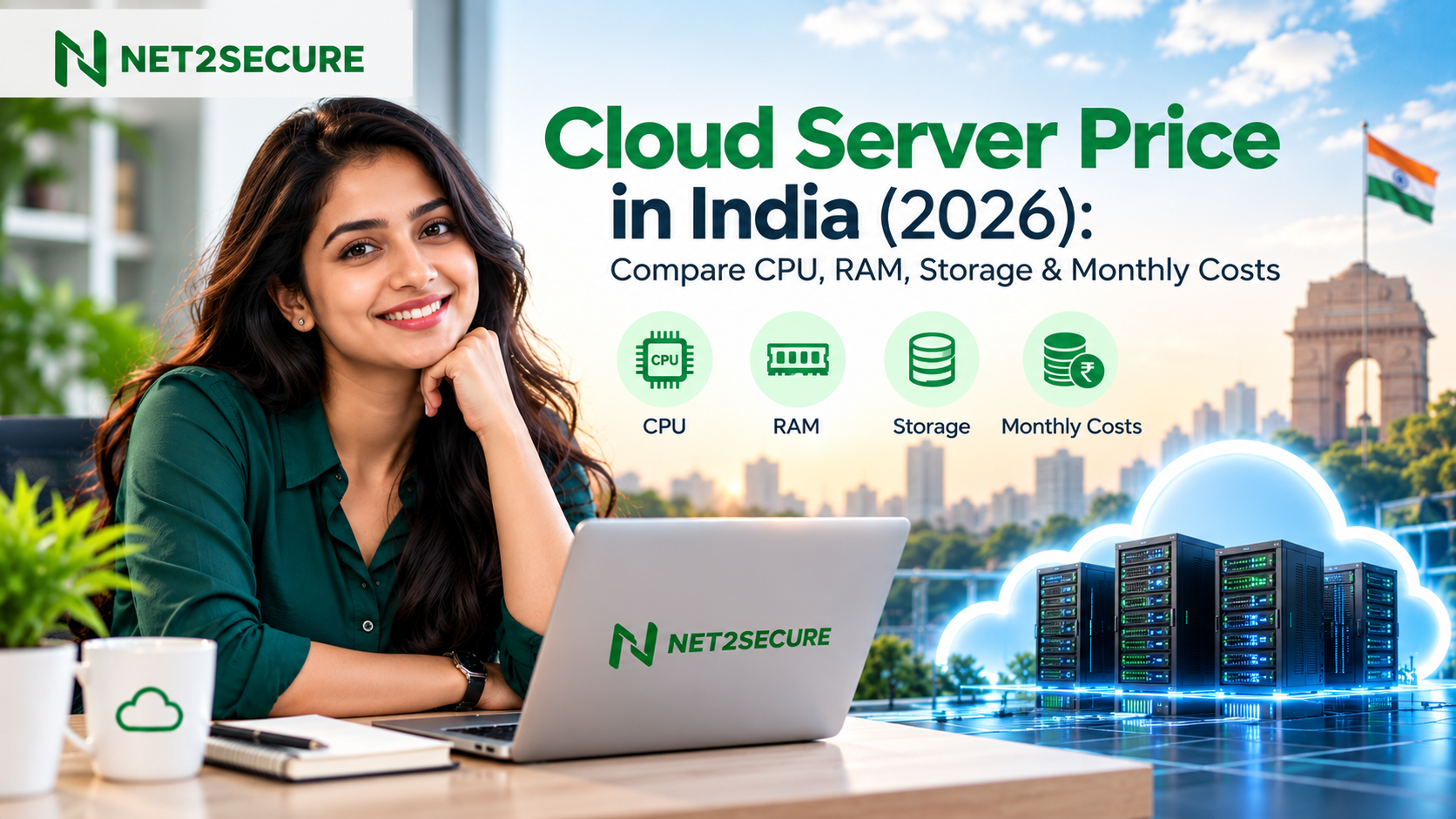
How much does a cloud server cost in India in 2026? This is one of the most important questions for startups, developers, IT managers, and businesses planning to move their websites or applications to the cloud. While cloud computing eliminates the need to purchase and maintain physical server hardware, choosing the right hosting plan requires understanding how CPU, RAM, storage, bandwidth, and additional services influence the final monthly bill. Cloud server prices in India vary considerably depending on the provider, server configuration, operating system, data center location, and level of technical support. A small business website may need only a basic virtual server, while an e-commerce application, ERP system, or enterprise database may require significantly more computing resources. Another important consideration is the difference between advertised web hosting prices and the actual cost of operating a server. Some providers bundle storage and bandwidth into a fixed monthly package, while others charge separately for computing resources, public IP addresses, backups, and network traffic. In this detailed guide, we compare cloud server pricing in India, explain the cost of different CPU and RAM configurations, examine popular cloud hosting providers, and help you identify an affordable server for your business requirements. Key Takeaways: Cloud Server Pricing in India Starting Price: Net2Secure currently advertises Cloud VM plans from ₹799/month and a separate Cloud Hosting Basic plan from ₹1,040/month. CPU and RAM: The number of virtual CPUs and the amount of RAM significantly influence cloud server pricing and application performance. Storage: SSD and NVMe storage characteristics, disk capacity, and input/output performance can affect both hosting costs and workload responsiveness. Operating System: Linux servers may avoid some commercial operating system licensing costs, while Windows Server deployments can require additional licence fees. Bandwidth: Monthly transfer allowances and outbound data charges should be checked before selecting a plan. Additional Charges: Backups, public IP addresses, security services, management, and taxes can increase the total monthly bill. Indian Data Centers: Hosting closer to Indian customers may improve latency, although actual performance depends on connectivity and network routing. Best Value: The cheapest cloud server is not necessarily the most cost-effective. Compare performance, support, reliability, and total ownership costs. Business Requirements: Small websites, online stores, databases, and enterprise applications require different resource configurations. Provider Comparison: Evaluate Net2Secure, AWS, Azure, Google Cloud, DigitalOcean, and Vultr based on your workload and budget. Quick Answer: How Much Does a Cloud Server Cost in India? Cloud server prices in India depend on the server configuration and service type. As of October 2026, Net2Secure advertises a Cloud Hosting Basic plan with 2 vCores, 4 GB RAM, 80 GB SSD storage, and 2 TB data transfer at ₹1,040 per month. Its separate Cloud VM product starts at ₹799 per month for 2 vCores, 4 GB RAM, 50 GB storage, and 1 TB data transfer. Higher configurations cost more. For example, Net2Secure lists a Cloud Hosting Starter plan with 4 vCores, 8 GB RAM, and 160 GB SSD storage at ₹1,880 per month. These are published package prices, not universal market averages. Confirm current offers, applicable GST, licensing, backups, and additional service charges before purchasing. Cloud Server Price in India (2026): Monthly Plan Comparison Cloud hosting providers commonly offer multiple resource configurations to accommodate different business requirements. Entry-level plans can be suitable for development and small websites, while larger configurations are designed for applications requiring more memory, processing capacity, or storage. The following table shows configurations and prices published on the Net2Secure Cloud Hosting page. Cloud Plan CPU RAM SSD Storage Data Transfer Monthly Price Basic 2 vCores 4 GB 80 GB 2 TB ₹1,040 Starter 4 vCores 8 GB 160 GB 2 TB ₹1,880 Enterprise 6 vCores 16 GB 250 GB Advertised as unlimited* ₹3,150 Enterprise Plus Confirm current specification Confirm current specification Confirm current specification Confirm current allowance ₹5,640 Pricing reference: Net2Secure Cloud Hosting, checked October 2026. Prices and specifications are subject to change. *Confirm the fair-use policy and applicable network conditions for any plan advertised with unlimited transfer. Enterprise Plus specifications should be checked on the live product page. These plans provide a useful starting point for estimating cloud hosting expenses. However, customers should also compare the included support, operating system options, security features, backup arrangements, and resource upgrade policies. Cheap Cloud Virtual Machine Prices in India Businesses searching for affordable cloud servers may also consider virtual machine hosting. A cloud virtual machine provides an isolated computing environment with allocated CPU, memory, storage, and networking resources. Net2Secure publishes a separate range of Cloud VM packages. These should be evaluated independently from its Cloud Hosting plans because the included resources and commercial terms differ. Cloud VM Plan vCPU RAM Storage Transfer Price / Month Cloud VM 1 2 4 GB 50 GB 1 TB ₹799 Cloud VM 2 4 8 GB 100 GB 1 TB ₹1,499 Cloud VM 3 4 16 GB 100 GB 1 TB ₹2,199 Cloud VM 4 6 12 GB 200 GB 1 TB ₹2,499 Cloud VM 5 6 16 GB 300 GB 1 TB ₹3,099 Cloud VM 6 6 32 GB 300 GB 1 TB ₹4,399 Source: Net2Secure Virtual Machine Hosting. Advertised monthly prices checked October 2026. Confirm storage technology, tax treatment, operating system licensing, backup inclusions, and renewal terms. For a small application, a 2-vCPU configuration may be sufficient if the software is lightweight and traffic is moderate. More demanding applications may benefit from 4 or 6 vCPUs and additional memory. Resource requirements should be determined through testing rather than relying only on a generic plan description. Compare Affordable Cloud Server Plans in India Explore Net2Secure's published cloud hosting configurations and select CPU, RAM, storage, and bandwidth according to your business requirements. View Cloud Hosting Plans What Determines Cloud Server Pricing in India? The price of a cloud server depends on several technical and commercial factors. Understanding these components helps businesses avoid purchasing unnecessary resources or selecting a server that cannot support their applications. 1. CPU and Virtual Core Allocation The central processing unit performs calculations and executes instructions required by applications. Cloud providers commonly allocate processing capacity using virtual CPUs, also called vCPUs or vCores. Applications that handle frequent requests, complex calculations, data processing, or multiple concurrent users may require more CPU capacity. However, the number of vCPUs alone does not guarantee performance because processor generation, clock speed, resource sharing, and virtualization technology also matter. A 2-vCPU server may support a lightweight website or development environment, while a 4-vCPU or 6-vCPU configuration may be more appropriate for larger applications. CPU-intensive workloads may require dedicated CPU resources or compute-optimized instances. 2. RAM and Application Performance RAM temporarily stores information that applications need while running. Insufficient memory can cause excessive disk swapping, slower response times, and application instability. For small websites, 2 GB or 4 GB of RAM may be adequate depending on the operating system and software stack. Content management systems, databases, and e-commerce applications may benefit from 8 GB or more. Memory-intensive workloads such as analytics, caching, and large databases can require substantially greater allocations. Businesses should monitor actual memory consumption before upgrading. 3. SSD vs NVMe Storage Storage capacity determines how much data a server can hold, including operating system files, applications, databases, and uploaded content. Many modern cloud servers use SSD-based storage. NVMe is a storage interface and protocol that can deliver lower latency and higher throughput than older interfaces when the underlying infrastructure supports it. However, not all SSD or NVMe offerings provide identical performance. Customers should compare published IOPS, throughput, latency, redundancy, and backup policies rather than relying solely on the storage label. 4. Data Center Location The physical location of a cloud server can influence latency, network performance, data residency, and sometimes pricing. Businesses serving customers in Delhi NCR, Mumbai, Bengaluru, Hyderabad, Chennai, or other Indian cities may prefer an Indian deployment region when available. However, an Indian location does not automatically guarantee faster performance. Network routing, internet service provider connectivity, peering arrangements, and application design all affect the user experience. 5. Bandwidth and Data Transfer Bandwidth describes network capacity, while data transfer typically refers to the amount of information sent or received over a billing period. Some cloud hosting plans include a monthly transfer allowance. Others charge for outbound internet traffic separately or apply different rates depending on destination and region. Businesses hosting media-heavy websites, downloadable files, APIs, or applications with significant traffic should estimate network consumption before purchasing. 6. Managed vs Unmanaged Cloud Hosting Unmanaged cloud servers generally give customers responsibility for operating system updates, application installation, monitoring, security hardening, and troubleshooting. Managed hosting may include some of these activities, but the scope varies considerably between providers. For example, one provider may manage only the infrastructure, while another may offer operating system patching, monitoring, backups, or application-level assistance. Always request a written description of the services included in the hosting package. Cloud Server CPU, RAM, and Storage Requirements by Workload Choosing the correct configuration is essential for balancing hosting costs and application performance. The following recommendations are indicative starting points, not guaranteed minimum requirements. Business Use Case Suggested CPU Suggested RAM Storage Starting Point Important Consideration Development and testing 1–2 vCPU 2–4 GB 30–50 GB Depends on development tools Small business website 2 vCPU 4 GB 50–80 GB Traffic and caching requirements WordPress or CMS hosting 2–4 vCPU 4–8 GB 50–100 GB Plugins, visitors, and database size E-commerce application 4–6 vCPU 8–16 GB 100–250 GB Concurrent users and checkout activity ERP or CRM application 4–8 vCPU 8–32 GB 100–300 GB Application vendor requirements High-traffic SaaS application 8+ vCPU or multiple instances 16 GB+ Workload-dependent Scaling, databases, and availability design These resource suggestions should be validated through workload testing. A well-optimized application may need fewer resources than a poorly configured application with similar traffic. Linux vs Windows Cloud Server Price in India Operating system selection can influence the total monthly cost of cloud hosting. Linux distributions are widely used for web servers, development environments, databases, and open-source applications. Many Linux distributions do not require a commercial operating system licence. However, enterprise subscriptions, managed support, or specialized software may still introduce additional costs. Windows Server is commonly selected for applications that depend on Microsoft technologies, including certain .NET applications, Windows-specific business software, and Microsoft server environments. Windows cloud server pricing may include additional operating system licence charges. Licensing arrangements depend on the provider, edition, deployment model, and any applicable customer entitlements. Feature Linux Cloud Server Windows Cloud Server Operating System Licence Often no commercial OS licence fee May require paid licensing Common Workloads Websites, APIs, open-source applications Microsoft-dependent applications Administration SSH and Linux management tools RDP, PowerShell, and Windows tools Resource Requirements Depend on distribution and applications Depend on edition and applications Best For Linux-compatible workloads Windows-specific software requirements If your application does not require Windows, a Linux server may offer a lower-cost deployment. However, operating system compatibility, administrator expertise, and application support should take priority over licence costs alone. For Microsoft-based workloads, explore Net2Secure Windows VPS Hosting and confirm the available operating system and licensing arrangements. Best Cloud Server Providers in India: Pricing and Features Compared Indian businesses can choose between domestic hosting providers and international cloud platforms. Each provider has different strengths, pricing structures, and technical requirements. The following comparison includes Net2Secure and five international providers. It is an editorial buying guide rather than a ranking based on independent benchmark testing. Provider Best For Pricing Approach Main Advantage Consideration Net2Secure Indian SMBs and application hosting Published monthly hosting packages Clear bundled configurations Verify inclusions and management scope AWS EC2 Enterprise and complex applications Usage-based and commitment options Extensive cloud ecosystem Billing complexity Microsoft Azure Microsoft-based enterprises Usage-based and commitment options Microsoft integration Licensing and service costs Google Cloud Developers and cloud-native applications Usage-based pricing Flexible compute configurations Regional and networking charges DigitalOcean Developers and startups Published Droplet configurations Simple developer experience Extra managed services may cost more Vultr Developers and distributed workloads Configuration-based pricing Multiple compute options Availability varies by location 1. Net2Secure Cloud Hosting Best for: Indian startups, small businesses, developers, digital agencies, and organizations seeking published monthly hosting configurations. Net2Secure offers cloud hosting and virtual machine services with different CPU, RAM, storage, and data transfer allocations. Its published packages make it easier to compare the starting resource requirements of different workloads. Businesses can evaluate the available plans for websites, application servers, development environments, and other compatible computing workloads. Pros: Published monthly packages, multiple resource configurations, and a range of related hosting services. Cons: Customers should verify backup arrangements, support responsibilities, operating system licensing, and any additional charges before purchasing. Pricing: Advertised Cloud Hosting plans start at ₹1,040/month, while the separate Cloud VM range starts at ₹450/month. Verdict: Net2Secure is worth considering for businesses comparing fixed monthly cloud hosting packages in India. 2. Amazon Web Services (AWS EC2) Best for: Enterprises, SaaS companies, and organizations requiring advanced cloud infrastructure. Amazon EC2 provides multiple virtual machine instance families designed for general-purpose, compute-intensive, memory-intensive, and specialized workloads. Its integration with AWS networking, databases, storage, and monitoring services makes it suitable for complex infrastructure environments. Pros: Extensive instance selection, flexible scaling, and integration with the wider AWS ecosystem. Cons: Costs can become difficult to estimate when storage, networking, public IPs, and additional services are billed separately. Pricing: Depends on instance type, operating system, region, usage duration, and purchasing option. Verdict: AWS is appropriate for organizations that need extensive cloud capabilities and have the expertise to manage infrastructure costs. 3. Microsoft Azure Virtual Machines Best for: Enterprises using Microsoft applications and hybrid infrastructure. Azure Virtual Machines support Windows and Linux workloads and integrate with Microsoft's broader cloud ecosystem. Organizations already using Microsoft enterprise services may benefit from Azure's identity, management, monitoring, and hybrid-cloud capabilities. Pros: Microsoft ecosystem integration, multiple VM families, and enterprise management features. Cons: Operating system licensing, storage, networking, and management services can increase costs. Pricing: Depends on VM size, operating system, region, and purchasing arrangement. Verdict: Azure is worth evaluating for Microsoft-dependent applications and enterprise cloud deployments. 4. Google Cloud Compute Engine Best for: Developers, analytics applications, and cloud-native infrastructure. Google Cloud Compute Engine provides configurable virtual machines and integrates with Google Cloud networking, storage, database, and monitoring services. Its machine families accommodate different resource requirements, including general-purpose and compute-intensive applications. Pros: Flexible machine configurations, automation capabilities, and integration with Google Cloud services. Cons: Pricing varies by region and machine type, while storage and network traffic may be billed separately. Pricing: Usage-based pricing with different rates for machine families, locations, and eligible discount arrangements. Verdict: Google Cloud is suitable for organizations requiring configurable cloud infrastructure and access to additional cloud services. 5. DigitalOcean Droplets Best for: Developers, startups, Linux applications, and small SaaS projects. DigitalOcean Droplets are cloud virtual machines offered in published configurations. The platform is popular among developers who prefer a relatively straightforward deployment experience. As of October 2026, DigitalOcean's published Basic Droplet pricing includes a 1-vCPU, 1-GB RAM configuration at $6/month and a 2-vCPU, 4-GB RAM configuration at $24/month. Pros: Published instance prices, developer documentation, and straightforward deployment tools. Cons: Application management remains the customer's responsibility unless an appropriate managed service is purchased. Additional features may increase costs. Pricing: Starts at $4/month for a smaller Basic Droplet configuration. Compare equivalent CPU, RAM, storage, and transfer allocations before comparing prices with Indian providers. Verdict: DigitalOcean is a useful option for developers who want predictable VM configurations and Linux-focused infrastructure. 6. Vultr Cloud Compute Best for: Developers, application hosting, and workloads requiring a choice of deployment locations. Vultr offers multiple cloud computing configurations for websites, applications, development environments, and other supported workloads. Customers can compare compute categories, processor options, and available deployment locations. Pros: Multiple compute options, developer-oriented tools, and geographic deployment flexibility. Cons: Instance availability varies by location, and backups, storage, or networking services may add to the final bill. Pricing: Depends on the selected compute category, configuration, and additional services. Verdict: Vultr is worth evaluating for teams that want flexibility in compute configuration and deployment geography. Cloud Server vs VPS vs Dedicated Server: Which Is More Cost-Effective? Cloud servers, VPS hosting, and dedicated servers can all run websites and applications, but they differ in architecture, scalability, and resource allocation. A VPS typically runs on a virtualized physical server with an allocated share of resources. A cloud server may use a broader infrastructure platform that supports additional orchestration, automation, and storage capabilities. However, product terminology varies between providers, and a service described as a cloud VPS may have characteristics of both categories. Dedicated servers provide access to physical server hardware rather than a virtual machine. They may be suitable for workloads requiring specific hardware, substantial sustained resources, or particular compliance arrangements. Business Use Case Suggested CPU Suggested RAM Storage Starting Point Important Consideration Development and testing 1–2 vCPU 2–4 GB 30–50 GB Depends on development tools Small business website 2 vCPU 4 GB 50–80 GB Traffic and caching requirements WordPress or CMS hosting 2–4 vCPU 4–8 GB 50–100 GB Plugins, visitors, and database size E-commerce application 4–6 vCPU 8–16 GB 100–250 GB Concurrent users and checkout activity ERP or CRM application 4–8 vCPU 8–32 GB 100–300 GB Application vendor requirements High-traffic SaaS application 8+ vCPU or multiple instances 16 GB+ Workload-dependent Scaling, databases, and availability design For businesses comparing alternatives, Net2Secure also provides virtual machine hosting and dedicated server rental services. Hidden Costs of Cloud Server Hosting in India Advertised monthly prices are useful for initial comparisons, but they may not represent the complete cost of operating a cloud server. GST and Applicable Taxes Businesses purchasing cloud hosting in India should check whether advertised prices include or exclude GST. For a standard taxable domestic hosting service, an 18% GST rate may apply, subject to the actual transaction and applicable tax rules. Backup and Disaster Recovery Backups are important for recovering from accidental deletion, software failures, ransomware, and other incidents. Some providers include basic backups, while others charge for snapshots, backup storage, retention periods, or managed recovery services. Customers should verify recovery procedures and test whether backups can actually be restored. Public IP Addresses Some cloud providers charge separately for public IPv4 addresses. Other hosting packages include one public IP in the monthly price. Confirm whether the selected plan includes an IP address and whether additional addresses are available. Bandwidth Overages Exceeding an included data transfer allowance may result in extra charges or service restrictions, depending on the provider's policy. High-traffic applications should estimate monthly outbound transfer requirements carefully. Operating System and Software Licences Windows Server, commercial database software, control panels, and other licensed applications can increase the cost of a cloud deployment. Customers should confirm whether licences are included in the quoted price. Managed Support Server administration, application troubleshooting, security management, and ongoing monitoring may be sold as separate managed services. Businesses without an internal IT team should account for these operational costs when comparing providers. How to Calculate Your Actual Monthly Cloud Server Cost The total monthly cost of cloud hosting can be estimated using the following formula: Total Monthly Cost = Compute + Storage + Bandwidth + Public IP + Backup + Software Licences + Managed Services + Applicable Taxes Consider a hypothetical business purchasing a cloud server package for ₹1,880 per month. Assume the business also purchases a backup service costing ₹300 per month and requires no additional licence, IP, or bandwidth charges. Cost Component Illustrative Monthly Amount Cloud server package ₹1,880 Optional backup service ₹300 Subtotal ₹2,180 Illustrative GST at 18% ₹392.40 Illustrative Total ₹2,572.40 This is a hypothetical cost calculation, not a Net2Secure quotation. The ₹300 backup charge is an illustrative assumption. Actual tax treatment, service inclusions, and additional fees must be confirmed with the provider. This example shows why businesses should compare the total monthly expense rather than selecting a provider based solely on the headline server price. Cloud Server Pricing by Business Use Case Cloud Server for Small Business Websites A small business website generally requires sufficient computing capacity to run a web server, content management system, and database. For a lightweight website with modest traffic, a 2-vCPU and 4-GB RAM configuration may be a reasonable starting point. However, actual requirements depend on the website's plugins, caching configuration, database activity, and number of concurrent visitors. Cloud Server for WordPress and E-commerce WordPress websites with WooCommerce or other e-commerce software may require additional memory and CPU capacity to handle product searches, shopping carts, checkout activity, and background tasks. A 4-vCPU and 8-GB RAM configuration can be a useful starting point for evaluating a growing online store, although performance testing should determine the final resource allocation. Cloud Server for Developers Developers frequently use cloud servers for application testing, staging environments, API hosting, and software deployment. Small development environments may operate on lower-resource instances, while containerized applications and continuous integration workflows may require more CPU and memory. Usage-based billing can be particularly useful for temporary environments that are not required continuously. Cloud Server for ERP and CRM Applications ERP and CRM software can have specific requirements for operating systems, databases, storage performance, and concurrent users. Before selecting a cloud server, businesses should consult the application's official hardware requirements and confirm compatibility with the hosting environment. Some business applications may also require Windows Server or additional software licences. Cloud Server for High-Traffic Applications High-traffic websites and SaaS applications may require multiple server instances, load balancing, database optimization, caching, and scalable storage. In these cases, the total infrastructure architecture is more important than the specifications of a single virtual machine. Businesses should plan for traffic peaks, monitoring, backup procedures, and failure recovery. How to Choose an Affordable Cloud Server in India Finding an affordable cloud server requires balancing technical requirements with the total cost of ownership. Start by identifying the operating system, application stack, expected number of users, and required storage capacity. This information helps determine the minimum practical server configuration. Next, compare CPU allocation, RAM, storage performance, network transfer allowances, and the available deployment locations. Ask providers whether their pricing includes public IP addresses, backups, operating system licences, monitoring, and technical support. It is also important to review the service-level agreement, maintenance policies, security responsibilities, and available recovery options. Where possible, test application performance before making a long-term commitment. Monitoring actual CPU utilization, memory consumption, disk latency, and network throughput can reveal whether a proposed configuration is sufficient. Finally, compare monthly and annual billing terms carefully. Discounts may reduce the effective price, but longer commitments can limit flexibility. Why Consider Net2Secure Cloud Server Hosting? For Indian businesses looking for cloud hosting with published monthly configurations, Net2Secure provides several options across cloud hosting and virtual machine services. Its Cloud Hosting plans list CPU, RAM, SSD storage, and data transfer allocations, allowing customers to compare available packages before requesting additional information. Net2Secure also offers related infrastructure services, including virtual machines, Windows VPS hosting, and dedicated server rental. Businesses can evaluate these services according to their application requirements, budget, operating system compatibility, and support expectations. Before purchasing, customers should confirm the available data center location, backup arrangements, operating system licensing, security responsibilities, and current pricing. Looking for an Affordable Cloud Server in India? Compare Net2Secure's cloud hosting plans and explore configurations for websites, business applications, development environments, and other workloads. Published Cloud Hosting plans start at ₹1,040/month, while separate Cloud VM plans start at ₹799/month. Compare Cloud Server Plans → Prices are subject to change. Confirm applicable taxes, licensing, backups, support, and service terms before purchasing. Frequently Asked Questions About Cloud Server Prices in India 1. What is the starting price of a cloud server in India? Cloud server prices vary by provider and configuration. Net2Secure currently advertises Cloud Hosting plans starting at ₹1,040/month and separate Cloud VM packages starting at ₹799/month. These are provider-specific published prices, not industry-wide averages. 2. How much does a 2-vCPU cloud server cost in India? The price depends on RAM, storage, bandwidth, operating system, and included services. Net2Secure lists a 2-vCPU, 4-GB RAM Cloud Hosting Basic plan at ₹1,040/month and a separate Cloud VM configuration at ₹799/month. 3. What is the price of a 4-vCPU, 8-GB RAM cloud server? Net2Secure advertises a Cloud Hosting Starter plan with 4 vCores, 8 GB RAM, and 160 GB SSD storage at ₹1,880/month. Its separate Cloud VM 2 plan lists 4 vCores, 8 GB RAM, and 100 GB storage at ₹1,499/month. 4. Is Linux cloud hosting cheaper than Windows cloud hosting? Linux hosting may cost less when no commercial operating system licence is required. Windows Server can introduce additional licensing charges. Actual costs depend on the provider and software requirements. 5. Is cloud hosting better than VPS hosting? Neither option is universally better. The right choice depends on infrastructure architecture, scalability, support, performance, and price. Some providers also use the terms cloud server and cloud VPS interchangeably. 6. Can I upgrade CPU and RAM later? Many cloud providers support resource upgrades, but the process depends on the platform. Some changes may require a restart, migration, or a different instance type. 7. Does cloud server pricing include backups? Backup inclusion varies by provider and plan. Customers should confirm whether snapshots, automated backups, retention, and recovery services are included or billed separately. 8. Is GST included in cloud server prices in India? Not necessarily. Some providers advertise prices before tax. Check the invoice terms and applicable GST before calculating the total monthly expense. 9. How much RAM is required for a cloud server? RAM requirements depend on the operating system, applications, databases, and number of concurrent users. A lightweight website may operate with 2–4 GB, while larger applications may need 8 GB, 16 GB, or more. 10. Which cloud server is best for WordPress? The best configuration depends on website traffic, plugins, database activity, caching, and optimization. A 2-vCPU, 4-GB RAM server may be a starting point for a small WordPress website, while larger sites may require additional resources. 11. Can I host an e-commerce website on a cloud server? Yes. Cloud servers can host e-commerce applications when the operating system, software stack, security controls, and resource allocation meet the application's requirements. 12. Which is the cheapest cloud server provider in India? There is no single provider that is always cheapest across every configuration. Compare equivalent CPU, RAM, storage, bandwidth, support, and licensing before making a decision. Net2Secure is one option offering published monthly cloud hosting and VM packages. Conclusion: Choosing the Right Cloud Server Price in India Cloud server pricing in India depends on the computing resources and services required to run a workload reliably. CPU, RAM, storage, bandwidth, operating system licensing, backups, and technical support all contribute to the final monthly cost. For small business websites and development environments, entry-level virtual servers may provide sufficient capacity at a relatively low monthly price. Growing e-commerce applications, databases, and enterprise systems may require more powerful configurations and additional infrastructure services. Businesses should avoid choosing a cloud server based solely on the lowest advertised price. Instead, compare the full cost of ownership, verify service inclusions, evaluate performance requirements, and select a provider that can support future growth. Net2Secure offers published cloud hosting and virtual machine packages that Indian businesses can compare when planning their infrastructure budgets. Reviewing the available plans and confirming current terms can help customers select a suitable configuration. Ready to compare your options? Explore Net2Secure Cloud Hosting or review its cloud infrastructure pricing to evaluate the available services. Research Methodology and Pricing Sources This article compares publicly advertised cloud hosting configurations, general infrastructure pricing models, and technical purchasing considerations. Net2Secure is included as the publisher's own hosting service. Published Net2Secure prices were checked in October 2026. International provider pricing is discussed according to official product information, with a limited number of clearly identified published DigitalOcean examples. No independent server performance benchmark testing was conducted for this article. Because cloud prices and product specifications can change, readers should confirm current rates, availability, tax treatment, and service inclusions before purchasing. Net2Secure – Cloud Hosting Plans Net2Secure – Virtual Machine Hosting Net2Secure – Cloud Infrastructure Pricing Amazon Web Services – EC2 Pricing Microsoft Azure – Virtual Machine Pricing Google Cloud – Compute Engine Pricing DigitalOcean – Droplet Pricing Vultr – Cloud Pricing Last pricing review: October 14, 2026. Update this date only after checking the relevant pricing pages again.